1971 Killing of Bengali Intellectuals A Tragic History
สรุปใจความสำคัญ
- The massacre of Bengali intellectuals was carried out by the Pakistan Army and the Al-Badr militia.
- The largest systematic executions took place on 25 March and 14 December 1971.
- 14 December is commemorated in Bangladesh as Martyred Intellectuals Day (Shaheed Buddhijibi Dibosh).
- A target list of intellectuals was found in Major General Rao Farman Ali's diary.
In 1971, the Pakistan Army and their local collaborators, most notably the far-right militia group Al-Badr, engaged in the genocidal massacre of Bengali intellectuals during the Bangladesh War of 1971. This systematic campaign of abduction, torture, and execution was part of the broader Bangladesh genocide, aimed at stripping the emerging nation of its intellectual leadership.
The Black Night of 25 March
The campaign began in earnest on 25 March 1971, when the Pakistan army launched Operation Searchlight, an extermination campaign against the Bengali people in East Pakistan. During this operation and its immediate aftermath, numerous professors, physicians, and journalists were abducted from their homes by Pakistani soldiers and local collaborators and executed.
The 14 December Executions
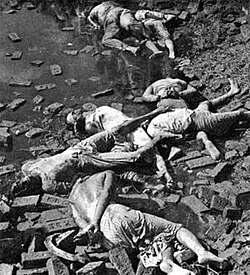
As the war neared its end and the surrender of the Pakistani forces became imminent, the Pakistan Army made a final, desperate effort to eliminate the intelligentsia of the new nation of Bangladesh. On 14 December 1971, over 200 Bengali intellectuals—including professors, journalists, doctors, artists, engineers, and writers—were abducted from their homes in Dhaka by the Al-Badr militia and the Pakistan Army.
Systematic Elimination
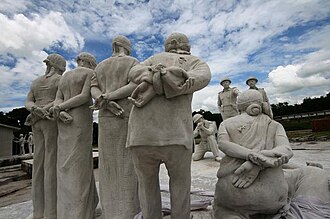
Victims such as novelist Shahidullah Kaiser and playwright Munier Choudhury were taken blindfolded to torture cells in areas like Mirpur, Mohammadpur, Nakhalpara, and Rajarbagh. They were later executed en masse, with the most notable sites being Rayerbazar and Mirpur. In memory of these victims, 14 December is observed in Bangladesh as Shaheed Buddhijibi Dibosh, or the Day of the Martyred Intellectuals.
Following Bangladesh's independence, a list of targeted intellectuals was discovered in the diary of Major General Rao Farman Ali, left behind at the Governor's House. The existence of this list was confirmed by Ali himself and former Pakistani bureaucrat Altaf Gauhar, who recounted an incident where he asked Ali to remove a friend's name from the list.
Notable Victims
The massacre of intellectuals occurred across various fields of expertise. Some of the notable victims include:
- Abul Fazal Ziaur Rahman (Physician)
- ABM Nurul Alam (Physician)
- Munier Chowdhury (Bengali Literature)
- Shahidullah Kaiser (Journalist)
- Altaf Mahmud (Lyricist and Musician)
- Dhirendranath Datta (Lawyer and Politician)
- Fazlur Rahman Khan (Geologist)
- Meherun Nesa (Poet)
Legal Verdicts on the War Crimes
On 3 November 2013, a special court in Dhaka sentenced two former leaders of the Al-Badr killing squad, Chowdhury Mueen-Uddin and Ashrafuz Zaman Khan, to death in absentia for the abduction and murder of 18 intellectuals. Similarly, on 2 November 2014, the International Crimes Tribunal of Bangladesh sentenced Mir Quasem Ali to death, identifying him as a key organizer of Al-Badr who planned the execution of the intellectuals on 14 December 1971.
คำถามที่พบบ่อย
What was the purpose of the killing of Bengali intellectuals in 1971?
The killings were part of a genocidal campaign intended to strip the newly independent nation of Bangladesh of its intellectual leadership and professional class to hinder its future development.
Who were the primary perpetrators of the massacre?
The primary perpetrators were the Pakistan Army and their local collaborators, specifically the far-right militia group known as Al-Badr.
What is the significance of the 14 December date?
14 December 1971 is the day when a large number of Bengali intellectuals were abducted and executed en masse, and it is now observed as Martyred Intellectuals Day in Bangladesh.