Computer Programming A Comprehensive Guide to Coding
สรุปใจความสำคัญ
- Ada Lovelace is widely credited with writing the first computer program in 1843.
- Machine code is the only language a computer's CPU can execute directly.
- Grace Hopper developed the first compiler tool and coined the term 'compiler' in 1952.
Computer programming, often referred to as coding, is the process of composing sequences of instructions, called programs, that computers can follow to perform specific tasks. This process involves designing and implementing algorithms—step-by-step specifications of procedures—by writing code in one or more programming languages. While programmers typically use high-level languages that are more intelligible to humans, the computer's central processing unit (CPU) ultimately executes machine code.
The Programming Process
Proficient programming requires a multidisciplinary approach, combining knowledge of the application domain, programming language syntax, generic code libraries, specialized algorithms, and formal logic. While the act of writing code is central, it is part of a larger ecosystem known as software development.
Auxiliary Tasks in Development
Beyond the actual coding, software development encompasses several critical tasks:
- Requirements Analysis: Defining what the software needs to do.
- Testing and Debugging: Investigating and fixing problems to ensure stability.
- Implementation of Build Systems: Managing how code is converted into executable programs.
- Configuration Management: Tracking and controlling changes to the software.
When these processes employ formal methods or follow a strict engineering design process, the field is referred to as software engineering.
History of Programming

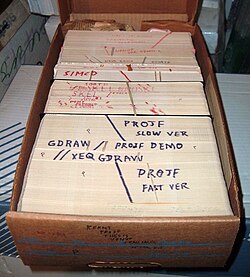
Programmable devices have existed for centuries. As early as the 9th century, the Banu Musa brothers described an automated mechanical flute player. In 1206, Al-Jazari invented a programmable drum machine using pegs and cams. By 1801, the Jacquard loom used punched cards to produce complex weaves, introducing a form of early "programming" via physical media.
The First Computer Program
The first computer program is generally attributed to Ada Lovelace in 1843. She published an algorithm to calculate Bernoulli numbers for Charles Babbage's Analytical Engine. Lovelace was visionary, recognizing that the Analytical Engine could be used for more than just mathematical calculations, marking the beginning of modern computing concepts.
The Evolution of Languages
In the 1880s, Herman Hollerith introduced machine-readable data storage. By the late 1940s, the stored-program computer concept emerged, allowing both programs and data to be stored in the same memory space.
Machine Language and Assembly
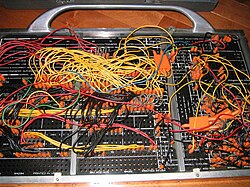
Early programs were written in machine code, consisting of binary notation (0s and 1s) that the CPU understands directly. To make this easier, assembly languages were developed, using textual abbreviations (e.g., ADD X, TOTAL) to represent machine instructions. However, assembly languages remain closely tied to the specific hardware architecture of the machine.
Compiler Languages
High-level languages abstract the hardware, making development simpler and more understandable. The first compiler-related tool, the A-0 System, was developed in 1952 by Grace Hopper, who coined the term "compiler." This led to the following of FORTRAN in 1957, the first widely used high-level language.
Common Programming Languages
| Language | Common Use Case |
|---|---|
| Python | Data Science, AI, Automation |
| Java | Enterprise Applications, Android Apps |
| JavaScript | Web Development (Frontend/Backend) |
| C++ | Game Development, System Software |
| Rust | Systems Programming, Memory Safety |
คำถามที่พบบ่อย
What is the difference between coding and software development?
Coding is the specific act of writing and editing code, while software development is the broader process that includes requirements analysis, testing, debugging, and project management.
What is a compiler?
A compiler is a specialized program that translates high-level programming language code written by humans into machine code that the computer's CPU can execute.
What is the difference between machine language and assembly language?
Machine language consists of binary code (0s and 1s), whereas assembly language uses mnemonic codes (like ADD or MOV) to represent those binary instructions, making it slightly more human-readable.
บทความที่เกี่ยวข้อง
การเขียนโปรแกรม
ภาษาโปรแกรมที่ไม่ใช้ภาษาอังกฤษ ทางเลือกใหม่ในการเขียนโค้ด
อ่านบทความฉบับเต็มอ่านต่อ → 02Artificial intelligence
Artificial intelligence
AI-assisted software development การพัฒนาซอฟต์แวร์ด้วย AI
อ่านบทความฉบับเต็มอ่านต่อ → 03Programming Languages
Programming Languages