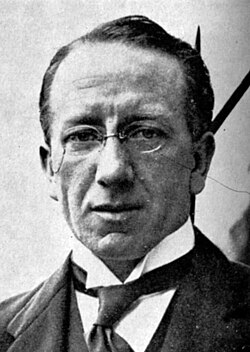
Frank Munsey Pioneer of the American Pulp Magazine
สรุปใจความสำคัญ
- Frank Munsey pioneered the use of inexpensive pulp paper and high-speed presses to create affordable mass-market magazines.
- He founded and published influential titles such as The Argosy and Munsey's Magazine.
- He revolutionized magazine distribution by bypassing the American News Company monopoly to increase profits.
- Munsey Park, New York, is named in his honor.
Frank Andrew Munsey (1854–1925) was a transformative figure in American media, serving as a newspaper and magazine publisher, banker, political financier, and author. Born in Mercer, Maine, Munsey's influence extended far beyond his New England roots, eventually shaping the landscape of New York City's publishing industry and leaving a lasting legacy in the form of Munsey Park, New York, and the Munsey Building in Baltimore.
Early Life and Ambitions
Born on August 21, 1854, on a farm near Mercer, Maine, Munsey grew up in a family that moved frequently across the state. His father, Andrew Chauncey Munsey, was a Civil War veteran born in Quebec. Frank's early professional life was marked by a drive for self-improvement; while working at a grocery store in Lisbon Falls, he taught himself telegraphy. This skill led him to various roles as a telegraph operator in Portland, Boston, and eventually as a manager for Western Union in Augusta, Maine.
It was in Augusta that Munsey's ambitions shifted toward publishing. Through his role at Western Union, he met influential figures such as Senator James Blaine and Edward Charles Allen, the founder of People's Literary Companion. These connections provided the spark and the initial knowledge needed to enter the world of print media.
The Rise of the Pulp Magazine
Munsey's journey into publishing was fraught with early financial struggles. After moving to New York in 1882 with limited funds, he initially partnered with E. G. Rideout to launch The Golden Argosy. Following Rideout's bankruptcy, Munsey took full control of the publication. He later launched Munsey's Illustrated Weekly to support James Blaine's presidential campaign, a venture that, while short-lived, helped him establish credit with suppliers.
Innovation in Production
Munsey is credited with revolutionizing the industry by utilizing high-speed printing presses and inexpensive, untrimmed pulp paper. This innovation allowed him to mass-produce magazines at a fraction of the previous cost. By pricing his publications as low as 10 cents—less than half the price of the "slick" magazines of the era—he opened the door for working-class readers who had previously been excluded from the magazine market.
Strategic Growth and Diversification
Munsey's business model relied on constant experimentation. He focused on action-adventure storytelling and fictional genres that appealed to the masses. If a title failed to be profitable, he would quickly pivot, replacing it with a new title from a pool of field-tested concepts. This agility allowed him to build a vast publishing empire and accumulate significant wealth.

Financial and Political Influence
Beyond publishing, Munsey became a powerful banker and political financier. His ability to navigate the high-stakes world of New York finance and political campaigning mirrored the efficiency and aggression he applied to his publishing ventures. His career spanned the transition from the 19th to the 20th century, reflecting the broader shift toward mass communication and commercialized media.
คำถามที่พบบ่อย
What was Frank Munsey's primary contribution to publishing?
Frank Munsey is credited with creating the pulp magazine by using cheap pulp paper and high-speed printing presses, making magazines affordable for the working class.
How did Munsey's pricing strategy affect the reader base?
By pricing his magazines at 10 cents, he targeted working-class readers who could not afford the 25-cent 'slick' magazines of the time.
Where was Frank Munsey born?
Frank Munsey was born in Mercer, Maine, in 1854.