Independent Democrats Understanding the Political Identity
สรุปใจความสำคัญ
- Independent Democrats are not a formal political party but individuals who align with the Democratic Party while remaining officially independent.
- Common reasons for this status include holding political views significantly to the left or right of the party mainstream or losing a primary nomination.
- Notable current examples include U.S. Senators Bernie Sanders and Angus King, who caucus with the Democrats.
In the complex landscape of United States politics, an independent Democrat is an individual who maintains a loose association with the Democratic Party but chooses to forgo formal membership to remain an independent. In other cases, this designation arises when a candidate is denied the Democratic nomination during a primary election or caucus but continues to align with the party's goals.
It is important to note that independent Democrats do not constitute a separate political party. Instead, they are individuals with varying political views. Often, a shift toward the far right or far left of the party mainstream serves as the catalyst for an individual to identify as an independent Democrat.
Active Members in Government
U.S. Congress
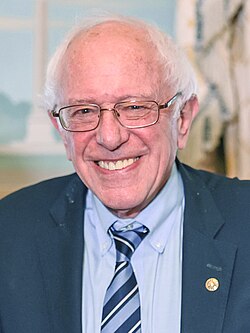
In the 119th Congress, two politically independent U.S. Senators caucus with the Democrats:
- Angus King (Maine): Serving since 2013; formerly the 72nd Governor of Maine.
- Bernie Sanders (Vermont): Serving since 2007; formerly a U.S. Representative from VT-AL.
State and Territorial Legislators
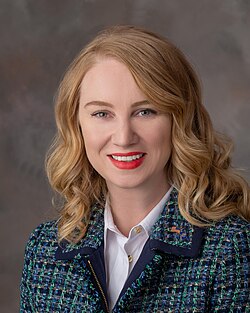
Several independent state legislators caucus with or consistently vote alongside the Democratic Party. Notable examples include Alyse Galvin and Rebecca Himschoot in Alaska, Megan Hunt in Nebraska, and Laura Sibilia in Vermont.
Similar dynamics exist in territorial legislatures. In the Northern Mariana Islands House of Representatives, 12 of the 16 independent members are in a coalition with the Democratic members. Additionally, the Council of the District of Columbia has two de jure independent members—Christina Henderson and Elissa Silverman—who were required to resign party membership due to restrictions on majority party candidates for at-large seats.
Historical Context
The 19th Century
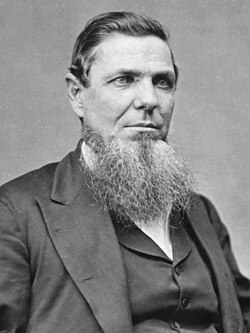
The first member of the U.S. House of Representatives to identify as an independent Democrat was Zadok Casey of Illinois (1833–1843), who transitioned from being a Jacksonian Democrat. In 1848, James Hutchinson Woodworth ran for Mayor of Chicago as an independent Democrat to distance himself from a corrupt local party organization, winning the election with 59% of the vote.
The 20th Century
Throughout the 1900s, various figures adopted this label. Strom Thurmond of South Carolina served as an independent Democrat in the 84th Congress before briefly returning to the Democratic Party and eventually joining the Republicans in 1964. Harry F. Byrd Jr. of Virginia also referred to himself as an independent Democrat after leaving the party in 1970 while continuing to caucus with them.
The 21st Century
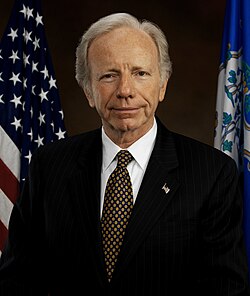
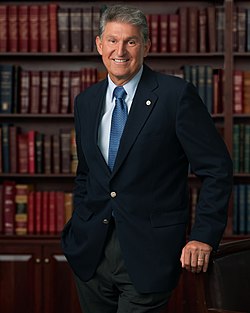
A prominent modern example is Joe Lieberman of Connecticut. After losing the 2006 Democratic primary to Ned Lamont, Lieberman created the "Connecticut for Lieberman" party and won the general election. He explicitly identified as an "Independent Democrat, capital I, capital D," and continued to caucus with the Senate Democrats until his departure from Congress in 2013.
คำถามที่พบบ่อย
What is an independent Democrat?
An independent Democrat is a person who is loosely associated with the Democratic Party but does not hold formal membership, or someone who lost a Democratic primary but still aligns with the party.
Do independent Democrats form their own party?
No, they are not a political party unto themselves; they are individuals with varying views who often caucus with the Democratic Party for legislative purposes.
Who are some famous independent Democrats in the U.S. Senate?
Bernie Sanders of Vermont and Angus King of Maine are prominent independent Senators who caucus with the Democratic Party.
บทความที่เกี่ยวข้อง
 01การเมือง
การเมือง
ผลการเลือกตั้งขั้นต้นพรรครีพับลิกันในหมู่เกาะเวอร์จินสหรัฐฯ 2024
อ่านบทความฉบับเต็มอ่านต่อ →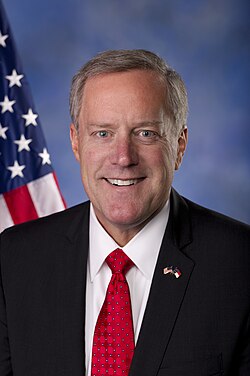 02การเมือง
การเมือง
มาร์ก เมโดวส์ อดีตหัวหน้าคณะทำงานทำเนียบขาวและนักการเมืองอนุรักษนิยม
อ่านบทความฉบับเต็มอ่านต่อ → 03การเมืองและสังคม
การเมืองและสังคม