Irreligion in the United Kingdom History and Trends
สรุปใจความสำคัญ
- The term 'secularism' was coined by George Holyoake in the mid-19th century.
- The Oaths Act 1888 was passed after Charles Bradlaugh fought for the right to affirm declarations of office instead of swearing religious oaths.
- The 2021 census showed that 'no religion' is the fastest-growing group in England and Wales.
Irreligion in the United Kingdom has a long and complex history, dating back to the 1700s when the rejection of Christianity first emerged as a formal philosophical position. Today, the UK exhibits a higher prevalence of irreligion compared to many other European nations, reflecting a deep-seated tradition of skepticism and rationalism.
Current Religious Landscape
Recent data highlights a significant shift in the spiritual identity of the British population. According to the 2021 census in England and Wales, less than half of the population identifies as Christian, while those identifying as having "no religion" represent the fastest-growing demographic. This trend has sparked debates regarding whether British institutions and legislative structures remain representative of a largely non-religious society.
| Religious Affiliation | Percentage |
|---|---|
| Christian | 46.2% |
| No religion | 37.2% |
| Muslim | 6.50% |
| Hindu | 1.70% |
| Sikh | 0.90% |
| Buddhist | 0.50% |
| Jewish | 0.50% |
| Other religions | 0.60% |
| Not stated | 5.99% |
Note: "No religion" includes Agnostics, Atheists, Humanists, Free Thinkers, and Jedi Knights.
The Early Roots 1700–1850
Organized irreligious activism grew from the legacy of British nonconformists. A pivotal moment occurred in 1793 with the founding of the South Place Religious Society, which later became central to the Ethical movement. Early intellectual challenges to faith were documented in works such as Matthew Turner's Answer to Dr. Priestley’s Letters to a Philosophical Unbeliever and Percy Bysshe Shelley's 1811 publication, The Necessity of Atheism.
The mid-19th century saw the rise of atheist media. The Oracle of Reason (1841–1843), published by Charles Southwell, was the first avowedly atheist periodical. Despite facing severe censorship and the imprisonment of its staff for "blasphemy," the movement persisted. George Holyoake, who was the last person in Britain convicted of blasphemy in a public lecture, later published The Movement and The Reasoner. Holyoake is credited with coining the term "secularism" to describe an ethical system based on science and reason rather than divine revelation.
Institutionalization and Legal Battles 1850–1900
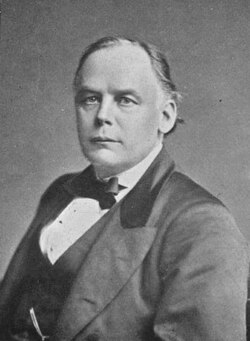
The term secularism provided a framework for the separation of religion and state. The National Secular Society, founded in 1866 by Charles Bradlaugh, fought to free citizens from government-mandated religious observances. Bradlaugh's own struggle to enter Parliament highlighted the legal barriers facing non-believers; he was denied his seat for five years because he refused to swear a religious oath. His persistence led to the Oaths Act 1888, which allowed individuals to affirm declarations of office without swearing by a deity.
The late 19th century also saw the birth of long-standing humanist organizations. The Freethinker began circulation in 1881, and the Union of Ethical Societies was formed in 1896, eventually evolving into the British Humanist Association. Simultaneously, the South Place Religious Society transitioned into the South Place Ethical Society (now the Conway Hall Ethical Society) under the influence of Moncure D. Conway.
The 20th Century and Beyond
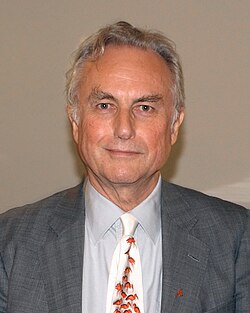
The 1960s marked a turning point for irreligion in the UK. The Ethical Union rebranded as the British Humanist Association and helped establish the International Humanist and Ethical Union, introducing the "Happy Human" symbol. During this era, non-religious values and secular education were promoted by broadcasters and intellectuals, and humanists began taking leadership roles in global organizations like UNESCO and the WHO.
However, the path to secularism was not without conflict. Figures like John William Gott were imprisoned for blasphemy in the early 20th century for attacking Christianity, which he viewed as an obstacle to socialist revolution. Despite these hardships, the movement continued to grow, eventually leading to the modern landscape where a significant portion of the UK population identifies as non-religious.
คำถามที่พบบ่อย
What does 'no religion' include in the UK census?
It includes individuals who identify as Atheists, Agnostics, Humanists, Free Thinkers, Jedi Knights, and those who simply state 'no religion: other'.
Who was Charles Bradlaugh?
A politician and founder of the National Secular Society who fought for the legal right of non-believers to hold public office without swearing a religious oath.
When did the term 'secularism' originate in the UK?
The term was coined by George Holyoake in 1851 to describe an ethical system based on science and reason as a replacement for Christianity.