Kapunda Exploring South Australia's Historic Copper Town
สรุปใจความสำคัญ
- Established in 1842 following the discovery of copper deposits.
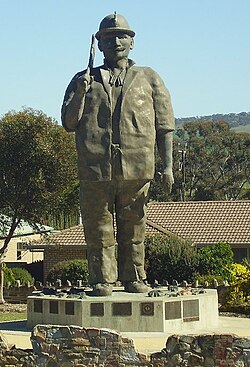
- Home to the Map Kernow statue, a symbol of the town's Cornish mining heritage.
- Once the home of Sir Sidney Kidman, one of Australia's most famous cattle pastoralists.
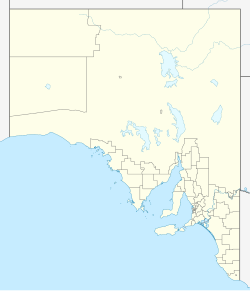
Kapunda is a charming town located on the Light River near the Barossa Valley in South Australia. Established following the discovery of significant copper deposits in 1842, the town has evolved from a bustling mining hub into a peaceful regional center known for its rich history and agricultural productivity.
The Copper Boom and Early History
The town's foundation was laid by Francis Dutton and Charles Bagot, who discovered copper ore outcrops in 1842. Mining began in earnest in 1844, progressing from surface ore removal to deep underground mining. This industry dominated the town's economy until 1879, when falling copper prices led to the mine's closure.
The mining community was a diverse melting pot of nationalities: Cornish miners, Irish laborers, and Welsh smelter specialists, alongside Scottish and English traders and German farmers. To overcome the challenges of deep mining, steam engines were installed in 1847 and 1851 to drive water pumps.
The Marble Quarries
Beyond copper, Kapunda is also home to quarries providing high-quality marble ranging from dark blue to white. This marble was used to face Parliament House in Adelaide and the pedestal of the statue of Venus on North Terrace.
Notable Figures and Landmarks
Kapunda is famously the home of Sir Sidney Kidman, a legendary cattle pastoralist who once owned properties larger than the British Isles. He held annual horse sales in the town, selling up to 3,000 horses a week. His former residence, Eringa, served as the administration building for Kapunda High School until a fire in March 2022.
The town also has a strong connection to the Catholic community, with Saint Mary MacKillop visiting and establishing a convent here.
Modern Kapunda and Local Attractions
Today, Kapunda is a producer of cereal crops such as wheat, barley, and oats, and contributes to the wine-growing industry of the nearby Barossa Valley. The population was recorded as 2,633 in the 2021 census.
Cultural Highlights
- The Kapunda Historical Society: Runs a museum housed in the old Baptist Church building (constructed in 1866).
- The Kapunda Celtic Music Festival: An annual event hosted by the town since 1976.
- Anlaby Station: A nearby historic station featuring a 23-room homestead and extensive gardens.
Interestingly, the town has been labeled the "most haunted town in Australia" following a television documentary, which has significantly increased tourist interest in the area.
คำถามที่พบบ่อย
What is Kapunda known for?
Kapunda is primarily known for its history as a copper mining town, its connection to Sir Sidney Kidman, and its agricultural production of cereal crops and wine.
Who is Map Kernow?
Map Kernow is the 8-metre statue of a traditional Cornish miner located at the southern entrance of the town, symbolizing the town's mining roots.
What is the significance of the marble quarries in Kapunda?
The marble quarries in Kapunda provide high-quality marble used in prominent Adelaide landmarks, such as Parliament House.
บทความที่เกี่ยวข้อง
Travel & History
Exploring Woodstock, Vermont History, Design, and Charm
อ่านบทความฉบับเต็มอ่านต่อ → 02Suburbs of Adelaide
South Australia
Blackwood, South Australia ทำความรู้จักย่านให้ความรู้สึกธรรมชาติในแอดิเลด
อ่านบทความฉบับเต็มอ่านต่อ →ประวัติศาสตร์และวัฒนธรรม