Lifeboat Ethics Garrett Hardin's Resource Dilemma
สรุปใจความสำคัญ
- Lifeboat ethics was proposed by ecologist Garrett Hardin in 1974.
- The metaphor represents rich nations as lifeboats and poor nations as swimmers in a resource-scarce environment.
- It is a conceptual extension of Hardin's 1968 'Tragedy of the Commons' theory.
- Hardin argued that attempting 'complete justice' by saving everyone in a resource-limited scenario could lead to 'complete catastrophe' for all.
Lifeboat ethics is a provocative metaphor for resource distribution proposed by ecologist Garrett Hardin in 1974. Building upon his earlier work on the "Tragedy of the Commons," Hardin used this analogy to explore the ethical dilemmas surrounding global wealth, poverty, and the finite nature of Earth's resources.
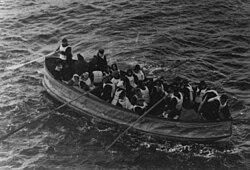
The Core Metaphor
Hardin describes a scenario involving a lifeboat capable of holding 60 people. Currently, 50 people are on board, leaving room for 10 more. However, the boat is surrounded by 100 swimmers in the ocean, all desperate to be rescued. The central ethical question is whether, and under what circumstances, the swimmers should be admitted to the boat.
In this metaphor, Hardin equates the rich nations to the individual lifeboats and the poor nations to the swimmers. He contrasts this with the "Spaceship Earth" model, arguing that while a spaceship has a single leader to manage resources, the Earth lacks such a central authority, making the lifeboat model a more accurate reflection of geopolitical reality.
Connection to the Tragedy of the Commons
Lifeboat ethics is deeply rooted in Hardin's 1968 concept of the Tragedy of the Commons. This theory posits that individuals acting independently and rationally according to their own self-interest will eventually deplete a shared limited resource, even when it is clear that it is not in anyone's long-term interest for this to happen.
- The Commons: Hardin cited an example of herdsmen sharing a pasture. Each herdsman adds more animals to their herd to maximize personal gain, eventually exhausting the pasture for everyone.
- Overpopulation: Hardin argued that the "freedom to breed" combined with the belief that everyone has an equal right to the world's resources would inevitably lead to global disaster.
- The Welfare State: He suggested that the welfare state disrupted natural checks on population growth, creating a situation where overbreeding did not lead to fewer descendants.
The Three Potential Solutions
To illustrate the brutality of the dilemma, Hardin proposed three potential responses to the 100 swimmers:
- Complete Justice, Complete Catastrophe: Bringing all 100 swimmers on board. This would swamp the boat, leading to the death of everyone.
- Selective Rescue: Bringing only 10 swimmers on board. This maximizes the boat's capacity but reduces the safety margin to zero and raises the agonizing question: Which ten do we choose?
- Strict Exclusion: Admitting none of the swimmers to ensure the survival of the 50 people already on board, though this requires guarding against boarding parties.
Further Ethical Complications
The metaphor extends into even darker territory when considering extreme scarcity, such as low food supplies. This raises harrowing questions regarding the treatment of dying passengers, the possibility of jettisoning the weak to save the strong, and the morality of cannibalism in survival situations to preserve the remaining population.
คำถามที่พบบ่อย
What is the main goal of the Lifeboat Ethics metaphor?
The goal is to illustrate the ethical and practical dilemmas of resource distribution between wealthy and poor nations, arguing that unlimited aid can lead to the collapse of both.
How does Lifeboat Ethics differ from the 'Spaceship Earth' model?
The Spaceship Earth model assumes a single, centralized leadership managing resources for all, whereas Lifeboat Ethics views the world as fragmented into separate 'boats' (nations) with their own interests.
What is the 'Tragedy of the Commons' in the context of this theory?
It is the idea that individuals pursuing their own short-term interest in a shared resource will inevitably deplete that resource, leading to long-term ruin for the entire group.