Mark Twain National Forest Exploring Missouri's Natural Beauty
สรุปใจความสำคัญ
- Established on September 11, 1939, and named after author Mark Twain.
- The forest covers over 3 million acres, of which approximately 1.5 million are public land.
- It is the only national forest in Missouri and spans 29 different counties.
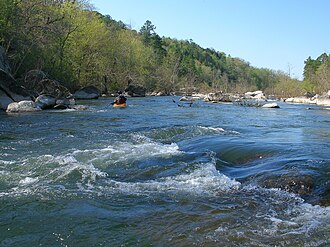
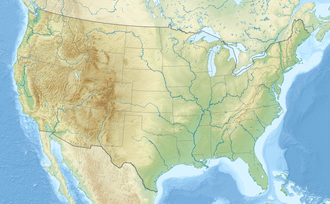
The Mark Twain National Forest (MTNF) is a stunning U.S. National Forest located in the southern half of Missouri. Comprising nine disconnected parcels of land, the forest is a diverse landscape of rolling hills, deep valleys, and unique geological formations. Established on September 11, 1939, and named after the legendary Missouri native author Mark Twain, the forest covers a total of 3,068,800 acres, with 1,506,100 acres of public land.
Geography and Unique Features
The MTNF spans 29 counties and represents 11% of all forested land in Missouri. Its management is divided into six distinct ranger districts: Ava-Cassville-Willow Springs, Eleven Point, Houston-Rolla, Cedar Creek, Poplar Bluff, Potosi-Fredericktown, and Salem. With its headquarters in Rolla, Missouri, the forest offers a variety of natural wonders.
Notable Landmarks
- Greer Spring: The largest spring on National Forest land, part of the Eleven Point National Scenic River, with an average daily flow of 214 million U.S. gallons.
- Glade Top Trail National Scenic Byway: A scenic drive offering breathtaking views extending over 30 miles to the Boston Mountains in Arkansas.
- Ozark Trail System: A 350-mile network of trails winding through the forest, providing endless opportunities for hiking and outdoor recreation.
History of the Forest
The forest's history is a complex one. Originally, established as both the Clark National Forest and the Mark Twain National Forest on September 11, 1939, the two were brought under one headquarters in Rolla in 1973 and finally combined and renamed as the Mark Twain National Forest on February 17, 1976.
The forest is located within the Ozark Highlands, an ancient landscape characterized by permanent springs, over 5,000 caves, rocky barren glades, and old volcanic mountains. Unlike other regions, portions of the Ozarks were never glaciated nor submerged under oceans.
The Role of the CCC
In the 1870s, extensive logging of native oak, hickory, and pine forests occurred. To combat the deforestation, President Franklin D. Roosevelt signed the MTNF into existence in 1939. Along with the Emergency Conservation Work Act (Civilian Conservation Corps - CCC), hundreds of young men worked at over 50 CCC sites to build roads and plant hundreds of acres of pine to preserve the natural resources of southern Missouri. Their legacy remains today in sites like the Rolla Ranger Station Historic District and the Winona Ranger Station Historic District.
Wilderness Areas and Accessibility
The forest contains several designated wilderness areas, providing pristine environments for those seeking solitude and more remote experiences:
- Bell Mountain Wilderness
- Devils Backbone Wilderness
- Hercules-Glades Wilderness
- Irish Wilderness
- Paddy Creek Wilderness
- Piney Creek Wilderness
- Rockpile Mountain Wilderness
For those seeking motorized recreation, the forest offers the Chadwick Motorcycle & ATV Use Area and the Sutton Bluff ATV, UTV, and Motorcycle Trail System.
คำถามที่พบบ่อย
What is the largest spring in the Mark Twain National Forest?
Greer Spring is the largest spring on National Forest land, flowing an average of 214 million gallons daily.
Hike the Ozark Trail system?
Yes, the forest features the 350-mile Ozark Trail system for hiking and outdoor exploration.
How was the Mark Twain National Forest created?
It was created through the combination of the Clark and Mark Twain National Forests, and was finally unified under the name Mark Twain National Forest in 1976.