New Zealand Sign Language History, Law, and Culture
สรุปใจความสำคัญ
- NZSL became an official language of New Zealand in April 2006.
- It shares 62.5% similarity with British Sign Language (BSL) and 33% with American Sign Language (ASL).
- NZSL is a natural language developed by the deaf community, not a manual version of English.
New Zealand Sign Language, or NZSL (Māori: te reo Rotarota o Aotearoa), is the primary language of the deaf community in New Zealand. It is a natural sign language developed by and for deaf people, possessing its own unique grammar and vocabulary, independent of spoken or written languages.
Legal Status and Recognition
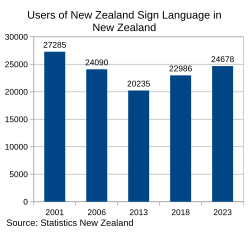
In April 2006, NZSL became an official language of New Zealand under the New Zealand Sign Language Act 2006. This landmark legislation was designed to ensure that the Deaf community has equal access to government information and services, creating specific rights and obligations within the legal system to protect the use of the use of the language.
Linguistic Roots and Characteristics
NZSL is technically considered a dialect of the British, Australian and New Zealand Sign Language (BANZSL) family. It shares a significant similarity with British Sign Language (BSL), with approximately 62.5% of its signs being similar, compared to only 33% similarity with American Sign Language (ASL). It utilizes the same two-handed manual alphabet as BSL and Auslan (Australian Sign Language).
Distinctive features of NZSL include a higher frequency of lip-patterns used in conjunction with hand and facial movements, a reflection of New Zealand's history of oralist education. Additionally, the vocabulary incorporates Māori concepts, such as marae and tangi, and specific signs for New Zealand placenames like Rotorua and Christchurch.
History of NZSL
Early Beginnings and the Era of Oralism
The language's roots trace back to British immigrants who brought BSL to New Zealand. The first known teacher, Dorcas Mitchell, taught sign language from 1868 to 1877. However, the establishment of the first school for the deaf in 1878 (the Sumner Deaf and Dumb Institution) marked a shift toward oralism—a philosophy that forbade sign language in favor of spoken language. This oppressive policy was maintained at various schools until 1979.
The Secret Language and Evolution
Despite official bans, deaf children continued to use sign language secretly, allowing NZSL to evolve independently for over a century. The primary hubs for the language's survival were Deaf Clubs in major cities. By 1979, the Sumner School adopted "Total Communication," but the signing used was an artificial signed form of English known as "Australasian Sign Language." This led to a number of younger signers incorporating these signs into their NZSL, leading some to refer to traditional NZSL as "Old Sign."
Academic Recognition and Professionalization
In 1985, Marianne Ahlgren's PhD thesis proved that NZSL is a fully-fledged language with its own consistent grammar of space. Academic and professional training began to emerge in 1992 with the establishment of the New Zealand Sign Language Teachers Association (NZSLTA) and interpreter training programs at the Auckland University of Technology.
Resources and Documentation
A major milestone was the publication of a comprehensive NZSL dictionary in 1998 by Victoria University of Wellington and the Deaf Association of NZ, containing roughly 4,000 signs. In 2011, this was expanded into an Online Dictionary of New Zealand Sign Language, providing video clips and search capabilities based on handshape and location.
คำถามที่พบบ่อย
Is New Zealand Sign Language the same as American Sign Language?
No, NZSL is much more closely related to British Sign Language (BSL) and Auslan, sharing about 62.5% similarity with BSL compared to only 33% with ASL.
What is the New Zealand Sign Language Act 2006?
The NZSL Act 2006 made NZSL an official language of New Zealand, ensuring the Deaf community has equal access to government services and information.
Why does NZSL use more lip-patterns than BSL?
The increased use of lip-patterns in NZSL reflects New Zealand's history of oralist education for deaf people, where spoken language was once prioritized over signing.