Positive Pressure Personnel Suits BSL-4 Bio-Containment
สรุปใจความสำคัญ
- Positive pressure ensures that air flows outward if the suit is punctured, preventing pathogens from entering.
- PPPS are used exclusively in Biosafety Level 4 (BSL-4) laboratories for the most dangerous pathogens.
- The technology for these suits is derived from early aerospace and military research into high-altitude and astronaut space suits.
Positive pressure personnel suits (PPPS), also known as positive pressure protective suits, are highly specialized, totally encapsulating, industrial protection inflatable garments. These suits are designed for use exclusively within special biocontainment or maximum containment (BSL-4) laboratory facilities, where researchers handle dangerous pathogens that are highly infectious and often lack available treatments or vaccines.
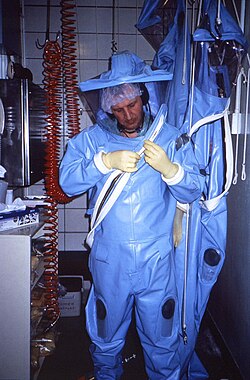
How PPPS Operates
A PPPS is a sophisticated variety of personal protective equipment (PPE) and a type of hazmat suit. It is air-tight and designed for positive pressure, which means that the internal pressure is higher than the external pressure. This design ensures that if the suit's integrity is compromised by a puncture or defect, air will be forced out of the suit rather than being sucked in, preventing contamination of the wearer.
Fresh, filtered air is typically delivered to the wearer through overhead tubing. To operate safely in these environments, personnel must undergo extensive training, which includes suit maintenance, emergency response drills, and communication protocols. Regular fit-checks and simulated puncture-response exercises are essential to ensure that users can manage accidental breaches effectively.
The Experience of Working in a PPPS
Working in a "hot suit" is physically and mentally demanding. Researchers have described the experience as being weighted down by gear, dealing with loud air hissing from the supply, and facing heat buildup and fatigue. The strict operational discipline required prevents self-contamination and accidental damage to the suit, and the process of exiting the suit involves thorough showering and suit inspection to ensure no punctures occurred during the work session.
History and Development
The concept of positive pressure protective garments can be traced back to mid-20th century aerospace and military research, drawing influence from space suits designed for high-altitude pilots and astronauts. In the late 1970s, ILC Dover, LP, developed the Demilitarization Protective Ensemble (DPE) for the U.S. Army to protect maintenance personnel at chemical weapons sites. This led to the development of the Chemturion suit for commercial applications.
Other notable developments include the Michelin Man-inspired suit designed by Delta Protection in 2003, which the CDC later referred to as "orange suits." These designs eventually became part of Sperian Protection and later Honeywell BSL 4 suits. Today, the Chemturion series is used by organizations such as Public Health Canada, the CDC, and various industrial companies like DuPont and Dow.
Examples of PPPS
- The U.S. Army's Demilitarization Protective Ensemble: An early positive pressure suit with a perfect safety record.
- The ILC Dover Chemturion "Blue Suit": A widely used multi-use, totally encapsulating suit.
- The Delta Protection "Orange Suit": A specialized design used in BSL-4 labs.
- The Sperian Protection "White Suit": A ventilated suit design.
คำถามที่พบบ่อย
What is a positive pressure personnel suit?
A positive pressure personnel suit (PPPS) is a totally encapsulating, air-tight garment designed to maintain internal pressure higher than the external environment to prevent contamination in BSL-4 laboratories.
Why is positive pressure important in a BSL-4 lab?
Positive pressure is critical because if the suit is punctured, the internal air pressure forces air out, preventing hazardous microorganisms from being sucked into the suit.
How is air supplied to the suit?
Fresh, filtered air is usually delivered to the wearer through overhead tubing systems within the containment facility.