Revolution OS The Documentary on Free Software and Linux
สรุปใจความสำคัญ
- Revolution OS is a 2001 documentary directed by J. T. S. Moore.
- The film documents the history of GNU, Linux, and the free software movement.
- It features interviews with key figures like Richard Stallman and Linus Torvalds.
- The film won Best Documentary at the Savannah Film and Video Festival and the Kudzu Film Festival.
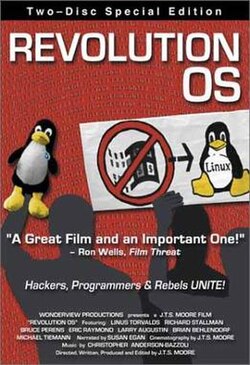
Released in 2001, Revolution OS is a comprehensive documentary film that explores the twenty-year history of the GNU Project, Linux, open source, and the broader free software movement. Directed by J. T. S. Moore, the film serves as a historical record of the ideological and technical shifts that transformed the computing landscape.
The Evolution of Free Software
The film traces the origins of the movement, beginning with the early days of computer hobbyists who shared code freely. It highlights a pivotal moment in 1978 when Bill Gates' "Open Letter to Hobbyists" signaled a shift toward proprietary software. This led Richard Stallman to struggle against proprietary vendors at the MIT Artificial Intelligence Lab, eventually prompting him to launch the GNU Project to create a free operating system.
Key Figures and Contributions
The documentary features interviews with several influential figures in the tech world:
- Richard Stallman: The philosopher of the free software movement.
- Linus Torvalds: The creator of the Linux kernel, who describes himself as the "engineer" to Stallman's "philosopher."
- Eric S. Raymond: A key figure in the open source movement.
- Brian Behlendorf: A developer of the Apache HTTP Server.
- Frank Hecker: A representative of Netscape, discussing the release of the source code for the Netscape browser, which paved the way for the Firefox browser.
Commercialization and the Open Source Movement
Revolution OS examines the tension between the purely ideological goals of free software and the commercial application of "open source." It discusses the role of companies like Cygnus Solutions and VA Linux, and the impact of the LinuxWorld Summit. The film also explores how the release of open-source code by Netscape became a signal event that forced business executives and the mainstream media to take notice of the open-source model.
Critical Reception
Reception of the film was mixed. Some critics, such as Ron Wells of Film Threat, praised it for explaining the principles of free software and open source, while others, like The New York Times, found it too one-sided and dense with jargon. Some reviewers described it as a "didactic" documentary, while others found it "surprisingly exciting" and "fascinating." Despite the controversies, it remains a significant historical document of the early 2000s tech revolution.
คำถามที่พบบ่อย
What is the main focus of Revolution OS?
The film focuses on the twenty-year history of the GNU Project, Linux, and the free software movement, exploring the ideological conflict between proprietary and open-source software.
Who are the primary figures interviewed in the film?
The primary figures include Richard Stallman, Linus Torvalds, Eric S. Raymond, Brian Behlendorf, and Michael Tiemann.
How does the film describe the difference between Richard Stallman and Linus Torvalds?
The film portrays Richard Stallman as the great philosopher of the movement and Linus Torvalds as the engineer who developed the Linux kernel.