Robert E. Park Pioneer of Urban Sociology and Human Ecology
สรุปใจความสำคัญ
- Robert E. Park was a pivotal figure in the Chicago School of sociology.
- He transitioned sociology from a philosophical discipline to an empirical science.
- He pioneered the use of participant observation in sociological research.
- He worked with Booker T. Washington at the Tuskegee Institute before joining the University of Chicago.
Robert Ezra Park (February 14, 1864 – February 7, 1944) was a seminal American urban sociologist who is widely regarded as one of the most influential figures in the early development of U.S. sociology. Park was a pioneer who transformed sociology from a passive philosophical discipline into an active, empirical science rooted in the study of human behavior. He made groundbreaking contributions to the study of urban communities, race relations, and the development of research methods, most notably the use of participant observation in the field of criminology.
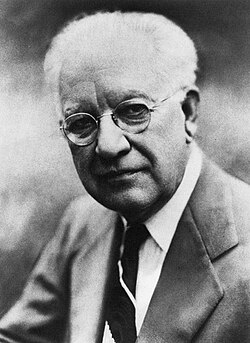
Biography
Childhood and Early Life
Born in Harveyville, Pennsylvania, on February 14, 1864, Robert E. Park grew up in Red Wing, Minnesota. This small town, characterized by its mix of immigrants and Mdewakanton people, served as an early laboratory for his interest in the diverse ancestries and behaviors of people. Despite not being seen as a promising student initially, Park developed a deep curiosity about the world and a passion for writing.
After high school, facing a lack of support from his father for college, Park briefly ran away from home to work on a railroad. However, his passion for social issues and writing led him to a career as a journalist. Between 1887 and 1898, he worked as a reporter in various cities including Detroit, Denver, New York City, Chicago, and Minneapolis. This period as a journalist was crucial, as it taught him to view the city as a social laboratory and provide a record of current events rather than just an expression of opinion.
Education and Academic Journey
Park first attended the University of Minnesota and later the University of Michigan, where he shifted his focus from science to philology and eventually to philosophy. Under the influence of professors like Calvin Thomas and the renowned philosopher John Dewey, Park developed an exploratory mindset and a "devouring curiosity" to understand human behavior and the world.
His academic journey continued across several prestigious institutions. He earned his MA from Harvard University and furthered his studies in Germany at the Friedrich Wilhelm University, the University of Strasbourg, and Heidelberg University, where he earned his PhD. This international exposure to different academic traditions helped shape his theoretical frameworks for sociology.
Academic Contributions and Career
Park's career was marked by two major professional phases. From 1905 to 1914, he worked with Booker T. Washington at the Tuskegee Institute, where he observed the social dynamics of the American South. Following this, in 1914, he joined the faculty at the University of Chicago, where he he played a leading role in the development of the Chicago School of sociology.
Human Ecology and Urban Sociology
Park is most noted for his work in human ecology, which he applied to the use of the city as a a way to understand how populations distribute themselves across a spatial environment. He viewed the city as a "social laboratory" and encouraged his students to conduct field research to conduct empirical studies of urban life.
Race Relations and Social Disorganization
Park's research into race relations, human migration, and cultural assimilation was pioneering. He challenged the notion that sociology was a moral science, arguing instead that it should be a natural science focused on the observation of human behavior in different environments. He defined sociology as a method for investigating the processes by which individuals are integrated into a permanent corporate existence, or society.
- Human Ecology: The study of how humans interact with their urban environment.
- Race Relations: The study of the processes of assimilation and cultural integration.
- Social Disorganization: The study of how rapid urban growth and migration lead to the breakdown of social controls.
คำถามที่พบบ่อย
Who was Robert E. Park?
Robert E. Park was an American urban sociologist who helped establish sociology as an empirical science and was a key figure in the Chicago School of sociology.
What is 'human ecology' in the context of Park's work?
Human ecology is the study of how human populations distribute themselves and interact within their urban environment, treating the city as a social laboratory.
What influenced Robert E. Park's career as a journalist?
His early experience as a reporter in various American cities allowed him to observe urban communities and race relations, which later informed his sociological research.