Robert M. Citino Renowned Military Historian
สรุปใจความสำคัญ
- Robert M. Citino is an expert on modern German military history and operational doctrine.
- He has served as the Samuel Zemurray Stone Senior Historian at the National WWII Museum.
- He advocates for the use of the term 'Bewegungskrieg' (manoeuvre warfare) instead of 'Blitzkrieg' to describe German military tactics.
Robert M. Citino is a distinguished American military historian recognized for his profound expertise in modern German military history, particularly focusing on the influence of World War II and the development of operational doctrine. He has served as the Samuel Zemurray Stone Senior Historian at the National WWII Museum and remains an active distinguished fellow at the Jenny Craig Institute for the study of War and Democracy.

Early Life and Academic Foundation
Born in Cleveland, Ohio, on June 19, 1958, Citino's interest in history was influenced by his father, a United States Army veteran of the Pacific War. After graduating magna cum laude from Ohio State University, he pursued advanced studies at Indiana University Bloomington, earning both his Master of Arts and Doctor of Philosophy degrees. His fluency in German and deep engagement with early 20th-century German military literature have been central to his scholarly contributions.
Professional Career and Academic Postings
Citino's career has spanned numerous prestigious institutions, including the University of North Texas, Lake Erie College, Eastern Michigan University, the United States Military Academy at West Point, and the United States Army War College. He has served as a consultant for the White House and the History Channel, and currently chairs the Historical Advisory Subcommittee of the Department of the Army.
Expertise in Wehrmacht History and Operational Doctrine
A significant portion of Citino's work focuses on the Wehrmacht. He is well-known for advocating a shift in terminology, suggesting that the term Bewegungskrieg (manoeuvre warfare) is a more accurate description of German tactics than the commonly used Blitzkrieg. His research delves into the strategic erosion of the German military during key campaigns of 1943, as explored in his award-winning book, The Wehrmacht Retreats: Fighting a Lost War, 1943.
Major Awards and Recognition
Citino has received numerous accolades for his historical research, including:
- 1993: Distinguished Teaching Award, Eastern Michigan University
- 2004: Paul M. Birdsall Prize for Best Book in Strategic Studies, American Historical Association
- 2005: Distinguished Book Award, Society for Military History
- 2012: Arthur Goodzeit Award, New York Military Affairs Symposium
- 2013: Distinguished Book Award, Society for Military History
- 2021: Samuel Eliot Morison Prize
Selected Bibliography
| Year | Title | Publisher |
|---|---|---|
| 1991 | Germany and the Union of South Africa in the Nazi Period | Greenwood Press |
| 1994 | Armored Forces: History and Sourcebook | Greenwood Press |
| 1999 | The Path to Blitzkrieg: Doctrine and Training in the German Army, 1920–1939 | Lynne Rienner; Stackpole Books |
| 2002 | Quest for Decisive Victory: From Stalemate to Blitzkrieg in Europe, 1899–1940 | University Press of Kansas |
| 2004 | Blitzkrieg to Desert Storm: The Evolution of Operational Warfare | University Press of Kansas |
| 2005 | The German Way of War: From the Thirty Years' War to the Third Reich | University Press of Kansas |
| 2012 | The Wehrmacht Retreats: The Campaigns of 1943 | University Press of Kansas |
| 2017 | The Wehrmacht's Last Stand: The German Campaigns of 1944–1945 | University Press of Kansas |
คำถามที่พบบ่อย
What is Robert M. Citino's primary area of expertise?
His primary expertise lies in modern German military history, specifically regarding World War II and the influence of German operational doctrine.
Has Robert M. Citino won any major awards for his books?
Yes, he has won multiple Distinguished Book Awards from the Society for Military History and the Paul M. Birdsall Prize from the American Historical Association.
question
What is the term Citino suggests using instead of Blitzkrieg?
บทความที่เกี่ยวข้อง
 01Current Events
military history
US Department of Defense Censorship of DEI Material
อ่านบทความฉบับเต็มอ่านต่อ →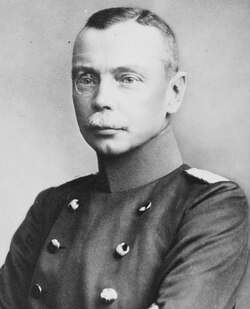 02ประวัติศาสตร์
Wehrmacht
Hans von Seeckt สถาปนิกผู้สร้างกองทัพเยอรมันยุคใหม่
อ่านบทความฉบับเต็มอ่านต่อ → 03ประวัติศาสตร์การทหาร
Wehrmacht