Guide to West Hampstead Stations Interchange & Services
สรุปใจความสำคัญ
- West Hampstead is served by three separate stations: Thameslink, London Overground, and the Jubilee line.
- The Jubilee line station is the busiest, with 10.5 million annual users as of 2018.
- Out-of-station interchanges between the three stations are free if completed within 20 minutes.
West Hampstead, located in north-west London, is served by a unique cluster of railway and underground stations. While they are physically separate buildings, they are located close to one another along West End Lane, effectively forming a railway interchange for commuters and travelers.
The Three Main Stations
There are three primary stations in the area, each serving a different network:
- West Hampstead Thameslink: Served by Thameslink services.
- West Hampstead (Overground): Served by the London Overground.
- West Hampstead (Tube): Served by the London Underground Jubilee line.
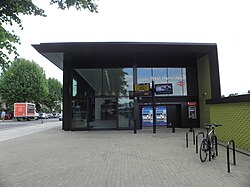
West Hampstead Thameslink
This is the oldest of the three stations. It has gone through several name changes, including West End, West End and Brondesbury, and West Hampstead Midland, before adopting its current name in 1988. It is situated on the western side of West End Lane at the Iverson Road junction. As of 2018, it saw an annual usage of 3.8 million passengers.
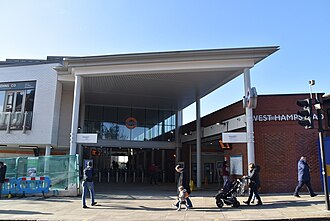
West Hampstead (Overground)
Located on the North London Line, this station provides services via London Overground. Formerly known as West End Lane until 1975, it sits on the western side of West End Lane between the tube station and Iverson Road. Its annual usage was recorded at 4.5 million in 2018.
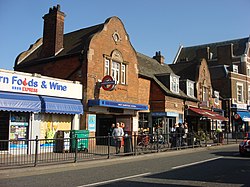
West Hampstead (Tube)
This station serves the Jubilee line of the London Underground and is located on the eastern side of West End Lane near Broadhurst Gardens. Interestingly, it was a Bakerloo line station until 1979. It is the busiest of the three, with an annual usage of 10.5 million as of 2018.
Non-Stopping Lines
While the area is a hub, three railway lines pass through West Hampstead without providing passenger platforms:
- The Metropolitan line: Trains bypass the tube station.
- The Midland Main Line: Trains pass through the Thameslink station without stopping.
- The Chiltern Main Line: Runs parallel to the Underground lines on the south side.
Interchanging Between Stations
To switch between services, passengers simply exit one station and walk along West End Lane to the next. The stations are spaced over approximately 200 metres (220 yards).
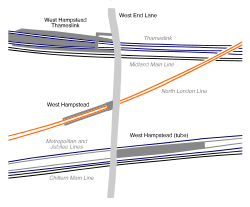
Out-of-station interchanges completed within twenty minutes are free of additional charge. For instance, a traveler going from Richmond to St Albans can use a single ticket by walking between the Overground and Thameslink stations. Step-free access is available at both the Thameslink and Overground stations.
The Integrated Station Proposal
In 2003, Chiltern Railways proposed a massive redevelopment to create a single integrated station complex. This plan would have allowed interchanges across five different lines, including new platforms for the Chiltern Main Line and Metropolitan lines. The proposal also included a central concourse, new housing, and the transformation of West End Lane into a tree-lined boulevard. However, the plan was put on hold in 2007 and is no longer feasible due to subsequent local development and the independent upgrading of the existing stations.
คำถามที่พบบ่อย
Are the West Hampstead stations connected internally?
No, they are physically separate buildings. Passengers must walk along West End Lane to transfer between them.
Which West Hampstead stations have step-free access?
Step-free access is available at the West Hampstead Thameslink and West Hampstead Overground stations.
Which line serves the West Hampstead tube station?
The West Hampstead tube station is served by the Jubilee line (it was previously served by the Bakerloo line until 1979).