Wickatunk, New Jersey History, Landmarks, and Heritage
สรุปใจความสำคัญ
- Wickatunk was founded in 1695 by three Scottish servants.
- The name Wickatunk is derived from the Algonquian word 'wikwetung', meaning 'the fishing place'.
- The community was once a hub for potato seed raising and award-winning apple production.
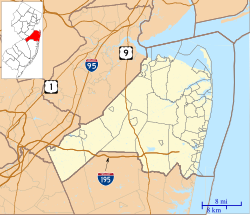
Wickatunk is an unincorporated community located within Marlboro Township in Monmouth County, New Jersey. Situated at an elevation of 180 feet (55 m) above sea level, this historic area is steeped in colonial heritage and agricultural tradition.
Founding and Early History
Founded in 1695 by three Scottish servants from the now-defunct community of Topanemus, Wickatunk's early layout was surveyed by George Keith. While early plans in the 1700s envisioned a village center with small town lots surrounded by plantations, this model proved impractical as it limited the townspeople's access to farming land.
The name "Wickatunk" is believed to derive from the Delaware (Algonquian) word "wikwetung", which translates to "the fishing place".
Agricultural Legacy and Produce
Wickatunk was once renowned for its rich agricultural output. In 1923, the community hosted representatives from potato seed raising sections across the United States and Canada, highlighting its importance in potato harvesting. The area was also celebrated for:
- Stayman and Rome apples, which won state awards.
- Registered Holstein Friesian cattle.
- Squab farming.
Interestingly, the area also had a history of illicit liquor manufacturing, with many farms being raided for Volstead Act violations during the late 1920s and early 1930s.
Transportation and Infrastructure
Railroad History
For many years, the Wickatunk shipping point was a central feature of the community, serving as part of a 12-mile single-track railroad line connecting Matawan to Freehold. However, the station and crossing were demolished in the 1970s after being listed as one of the most dangerous railroad crossings by the Automobile Club of America in 1908. Today, the Henry Hudson Trail utilizes this former right of way.
Roads
The community is primarily served by Route 79, which passes through its center, as well as County Routes 3 and 520.
Points of Interest
Old Scots Burying Ground
Dating back to 1685, this historic cemetery is adjacent to the site of the oldest Presbyterian church in the area (built in 1692). The cemetery contains at least 100 known graves, including that of the church's first pastor, Rev. John Boyd. A notable monument made of Scottish and Vermont granite and Irish Graystone commemorates Rev. Boyd and John Tennent.
Robert Collier Estate
Built in 1901 by Robert J. Collier, this summer home was a hub for celebrations and the annual "Monmouth County Hounds" fox hunt. The estate was eventually donated and became Collier High School.
General Store and Post Office
A general store and post office built on Route 79 in the late 1920s is now a bike store. The post office gained notoriety in 1928 when postal inspector discovered that William T. Smock had been embezzling funds after his wife, the postmistress, passed away.
Marlboro Psychiatric Hospital
Established in 1928 on 509 acres of land, including portions of Wickatunk, the facility was originally referred to as "Hillsdale asylum at Wickatunk" before becoming the Marlboro Psychiatric Hospital.
Notable People
- Robert J. Collier (1876–1918): Editor of Collier's Weekly and owner of P.F. Collier & Son.
- John Warne Herbert Jr. (1853–1934): Lawyer and participant in the first-ever college football game.
- John Warne Herbert Sr. (1820-1898): Lawyer and politician.
คำถามที่พบบ่อย
What is the significance of the Old Scots Burying Ground?
It is a historic cemetery dating back to 1685, containing at least 100 graves and a monument dedicated to Rev. John Boyd, the first pastor of the local Presbyterian church.
What happened to the Wickatunk railroad station?
The station and crossing were demolished in the 1970s; the right of way is now used by the Henry Hudson Trail.
Who was Robert J. Collier?
He was the editor of Collier's Weekly and owner of P.F. Collier & Son, who built a summer estate in Wickatunk in 1901.