Rowlands Castle A Historic Hampshire Village
สรุปใจความสำคัญ
- Rowlands Castle is named after a motte-and-bailey castle built between 1066 and 1189.
- The village green is uniquely shaped like a lung, tapering to a point in the west.
- St. Hubert's chapel in Idsworth is a Grade I listed building dating back to 1053.
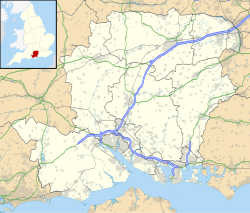
Rowlands Castle is a charming village and civil parish located in the East Hampshire district of Hampshire, England. Situated approximately 2.9 miles (4.7 km) north of Havant, on the border between Hampshire and West Sussex, it serves as a quiet residential community with a rich tapestry of history and natural beauty.
History and Heritage
The village's name is derived from a motte-and-bailey castle, the remains of which are located south of Redhill Road and west of the railway line. While the castle was built between 1066 and 1189, it was first documented as ROLOKECASTEL in 1381. Although it was once a hub of activity—even hosting King Henry II for hunting and amusement in the twelfth century—it was abandoned by the 15th century. Today, only earthworks and small sections of wall remain.
Archaeological evidence also suggests that the Romans once produced pottery, bricks, and tiles in the vicinity, utilizing the local clay deposits.
Geography and Landscape
The village is situated within the area of the former Forest of Bere, on the eastern boundary of Hampshire. Its geography is diverse, with the northern part of the village resting on the chalk of the southern South Downs, while the south lies on the Reading Formation, which historically supported a local brick industry.
The Village Green
The focal point of the village is its uniquely shaped village green, which resembles a lung. It is approximately 250 yards (230 m) long and 40 yards (37 m) wide at the eastern end, tapering to a point at the western end near the railway arch.
Religious Sites and Architecture
The village is home to several significant religious sites, including the Church of England parish church of St John the Baptist, known for its stained-glass depiction of the Crucifixion by Francis Austin, and the Church on the Green United Reformed Church.
St. Hubert's Chapel
Located in the far north of the civil parish in Idsworth, St. Hubert's chapel is a Grade I listed building built in 1053. Originally dedicated to St. Peter and St. Paul, the chapel contains medieval paintings from around 1300, including depictions of St. Peter, St. Paul, and St. Hubert. To mark the millennium, a new fresco was added to the church's nave in the year 2000.
Transport and Facilities
Rowlands Castle is a quiet residential village that offers a few small shops, including a hardware store and a convenience store, and two local pubs. For those visiting, the model railway depicting the village during the war is on display at nearby Stansted House.
Rowlands Castle railway station serves the village on the Portsmouth Direct line, providing hourly services to London Waterloo and Portsmouth. Additionally, the village is crossed by several long-distance footpaths, such as the Monarch's Way and the Sussex Border Path, and National Cycle Route 22 passes through the village green.
คำถามที่พบบ่อย
Where is Rowlands Castle located?
Rowlands Castle is a village and civil parish in the East Hampshire district of Hampshire, England, located 2.9 miles north of Havant.
What is the latest historical significance of St. Hubert's chapel?
St. Hubert's chapel is a Grade I listed building containing medieval paintings from around 1300 and a new fresco added in 2000.
How can you get to Rowlands Castle by train?
The village is served by Rowlands Castle railway station on the Portsmouth Direct line, which provides generally hourly services between London Waterloo and Portsmouth.
บทความที่เกี่ยวข้อง
 01การท่องเที่ยว
การท่องเที่ยว
ทำความรู้จัก Poynings หมู่บ้านอันเงียบสงบใน West Sussex
อ่านบทความฉบับเต็มอ่านต่อ →การท่องเที่ยวและกิจกรรมกลางแจ้ง
Vanguard Way เส้นทางเดินป่าจากลอนดอนสู่ชายฝั่งนิวเฮเวน
อ่านบทความฉบับเต็มอ่านต่อ →03ท่องเที่ยวท่องเที่ยว